How to Sound More Confident When You Speak
Practical ways to sound more confident at work, on the phone and in interviews: pace, pauses, ending sentences down, fewer fillers, and practising with recordings on iPhone with Fenno.
Listeners judge confidence from how you sound before they weigh what you say. The good news: the signals are specific and trainable.
1. Slow down a little
Rushing sounds nervous. A steady pace with clear pauses sounds deliberate. See how to slow down when you speak too fast.
2. Pause instead of filling
"Um" and "like" signal hesitation; a short silence signals thought. See how to reduce filler words.
3. End statements on a downward note
Rising at the end of a statement makes it sound like a question. Let your pitch fall at the end of points you want to land.
4. Breathe and project
Take a full breath before you start and speak from it. Volume that reaches the back of the room, or a clear level on the phone, sounds sure of itself.
5. Prepare the first and last sentence
Openings and closings are remembered most. Rehearse them until they sound natural.
On the phone and in interviews
Stand up during important calls; it changes breathing and energy. In interviews, take a breath before answering and keep answers structured: point, example, close.
Practise with feedback
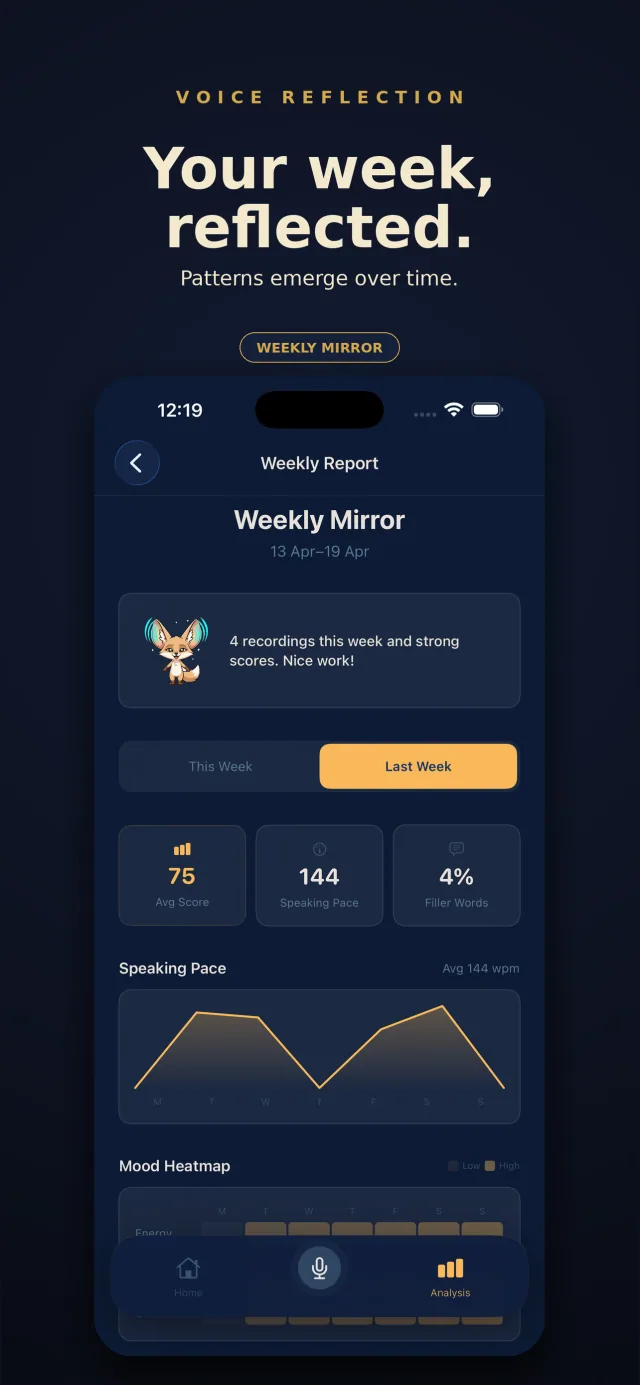
Record a two-minute practice and listen back. Fenno shows pace, pauses, filler words and vocal energy for each recording on your iPhone, so you can see whether the change you are working on is happening. Everything stays on the device.
Frequently asked questions
How can I sound more confident on the phone?
Stand up, breathe before you speak, slow down slightly, pause instead of using fillers and let your pitch fall at the end of statements.
How do I sound confident in an interview?
Prepare your opening and key examples, pause before answering, structure each answer and avoid ending statements like questions.
Is there an app to practise speaking?
Yes. Fenno for iPhone records your practice and shows pace, pauses, filler words and vocal energy, privately on the device.