Am I Too Trusting? Signs, and a Simple Way to Test Yourself
Signs you may trust people too quickly, why it happens, how the Trust game measures it, and practical ways to trust wisely without becoming cynical.
Trust is how cooperation starts, and most of the time it pays off. Trusting too quickly, though, can leave you lending money you never see again, sharing secrets that travel, or staying in arrangements that only benefit the other side.
Signs you may be too trusting
- You often feel surprised or let down by the same kinds of situations.
- You give people the benefit of the doubt again after clear broken promises.
- You share personal or financial details early with people you barely know.
- You find it hard to ask for evidence, a contract or a second opinion because it feels rude.
Why it happens
Some people simply have a high baseline of trust, often a strength. Others avoid conflict, want to be liked, or judge others by their own honesty. None of these is a flaw on its own; the issue is trust that does not update after evidence.
How researchers measure trust
The Trust game asks how much money you would send to a stranger, knowing it will be tripled and they decide what to return. Your sending shows your trust; what you return when roles swap shows your reciprocity. Repeated rounds show whether your trust adjusts after being exploited.
Test yourself
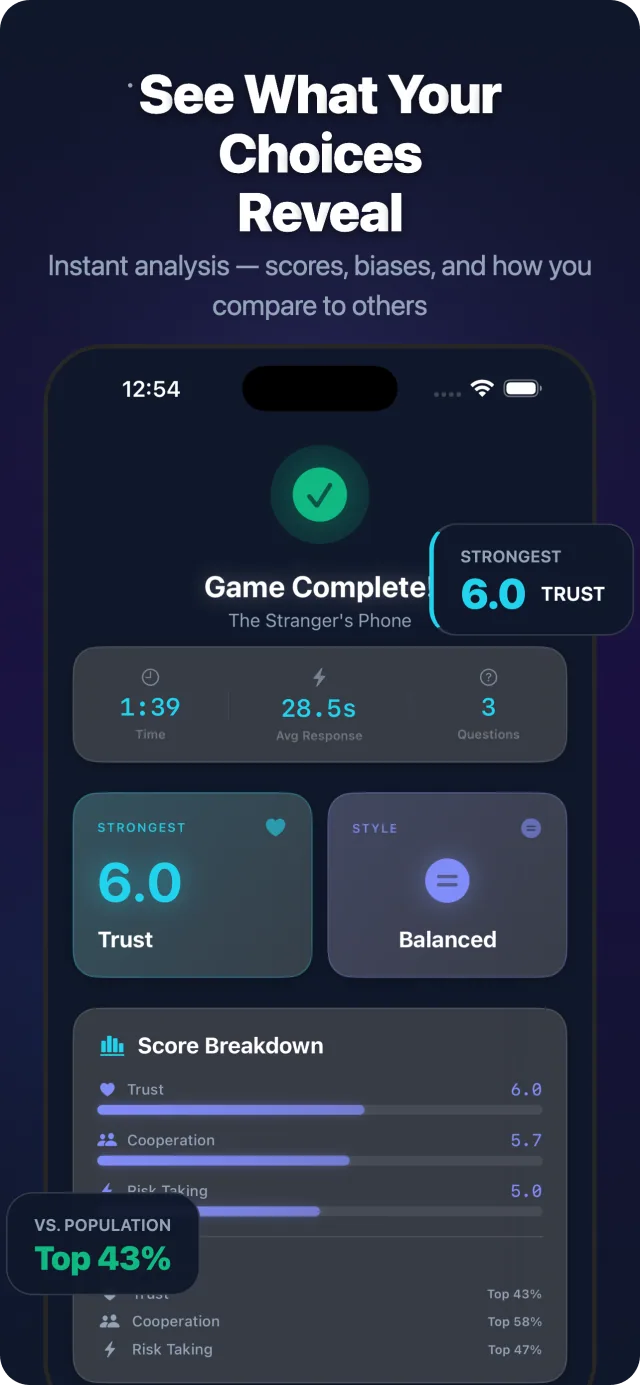
MindType for iPhone includes the Trust game and related games, and maps trust alongside cooperation, fairness and risk. It is for self-reflection, not a diagnosis.
Trust wisely, not less
- Extend trust in steps: small first, more after it is honoured.
- Keep trust and verification separate: checking is not an accusation.
- Notice repeated patterns, not single events.
- If trust problems come from past harm or affect your relationships, talking to a counselor can help.
Frequently asked questions
How do I know if I'm too trusting?
Look for repeated disappointments in similar situations, giving more chances after broken promises, and sharing sensitive information early. Trust that does not adjust after evidence is the key sign.
Is being too trusting a weakness?
Not in itself. High trust helps relationships and teamwork. It becomes a problem when it does not update after people break it.
Is there a trust quiz?
Game-based measures like the Trust game show trust through choices. MindType for iPhone includes it and reports your trust dimension.